Home Elevator vs. Stair Lift: Which is Better for Your Situation?

home-stairlift-vs-elevator

When mobility becomes a challenge, the stairs can feel like a mountain standing between you and the home you love. For many Utah homeowners, the immediate reaction is to look into a stair lift. They are visible, common, and widely advertised. However, as accessibility technology has advanced, residential elevators—specifically shaftless models like the Stiltz Home Lift—have become a superior long-term alternative that challenges the “budget-friendly” narrative of stair lifts.

If you are weighing these two options, this guide will break down the value, space requirements, and lifestyle impacts of each to help you make the right choice for your future.

TLDR: While stair lifts are a lower-cost short-term option, they do not add to your home’s resale value and can narrow your staircase. Home elevators—particularly shaftless models like the Stiltz Home Lift—are a superior long-term investment. They offer a smaller footprint, increase property value, and accommodate wheelchairs and heavy items, making them the ultimate “future-proof” choice for aging in place.

1. The Financial Reality: Upfront Cost vs. Long-Term Value

It is no secret that a stair lift is the more financially accessible entry point. A standard straight model is relatively inexpensive, though a custom curved model requires a higher level of investment.

In contrast, a residential elevator represents a more significant initial commitment. While traditional hydraulic elevators require extensive, expensive construction, modern shaftless elevators offer a more mid-range investment.

The Investment Factor:

  • Stair Lifts: Generally considered “medical equipment.” They are depreciating assets that do not add resale value to your home. They can even deter future buyers who don’t need them, often requiring removal before a sale.
  • Home Elevators: These are considered a permanent home improvement. Much like a high-end kitchen remodel, an elevator enhances a property’s market appeal and resale value, especially in Utah’s growing “aging-in-place” real estate market, where accessibility is a premium feature.

2. Space and Aesthetics: The “Clutter” Factor

One of the biggest misconceptions is that elevators are “bulky” and require a massive shaft and machine room.

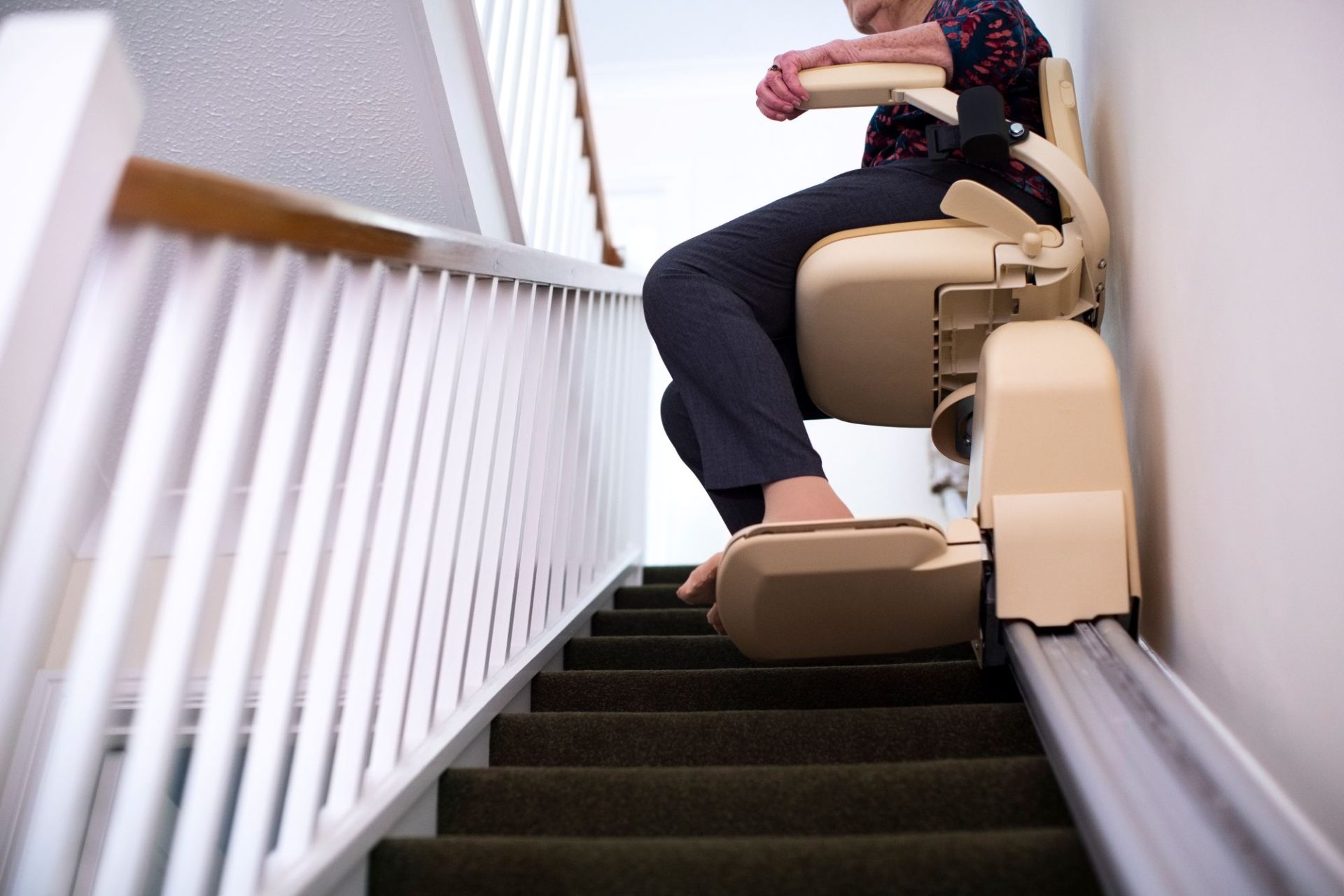
  • Stair Lifts: While they don’t require construction, they permanently narrow your staircase. This can create a tripping hazard for other family members and make carrying laundry, groceries, or furniture up the stairs significantly more difficult.
  • The Stiltz Advantage: Modern home lifts have a remarkably small footprint. The Stiltz Duo, for example, takes up roughly the same space as a small armchair. Because it is “shaftless” and travels on self-supporting rails, it can be tucked into a living room corner or even inside a closet. When the lift is on the other floor, the floor space it leaves behind is completely clear.

3. Mobility and Utility: More Than Just a Ride

When choosing between the two, you must ask: What am I actually transporting?

  • Stair Lifts: These are designed to move one person who can sit and stand independently. They cannot carry wheelchairs, and they are not designed for moving heavy items like suitcases or vacuum cleaners.
  • Home Elevators: A lift like the Stiltz Trio is designed to accommodate a standard-sized wheelchair or up to three people. This makes the entire home truly accessible. Even if you don’t use a wheelchair today, an elevator “future-proofs” your home against any potential health changes. Plus, it doubles as a freight lift for moving heavy items between floors.

4. Installation: Hours vs. Days

A common fear with elevators is the “construction nightmare.” Traditional elevators take weeks to install and require deep pits and load-bearing walls.

However, shaftless home lifts have bridged the gap. While a stair lift takes a few hours to install, a Stiltz lift can often be completed in just 1–2 days. It plugs into a standard power outlet and requires minimal structural work—usually just a simple ceiling aperture.

The Verdict: Which is Right for You?

Choose a Stair Lift if:

  • You have a very tight immediate budget.
  • Your mobility issue is minor and expected to remain stable.
  • You do not plan on staying in your home for more than 2–3 years.

Choose a Home Elevator if:

  • You want to increase your home’s resale value and long-term equity.
  • You use a walker or wheelchair, or want to be prepared for one.
  • You want to keep your staircase clear and maintain your home’s aesthetic.
  • You are looking for a long-term aging-in-place solution that provides total independence.


Key Takeaways

  • Financial Value: Elevators add permanent property value; stair lifts are generally considered depreciating medical equipment.
  • Accessibility: Elevators accommodate wheelchairs, multiple passengers, and heavy cargo; stair lifts are for a single seated passenger.
  • Home Design: Shaftless lifts like Stiltz maintain an open staircase and use less than 9 square feet of floor space.
  • Future-Proofing: An elevator provides a lifetime solution for all levels of mobility, ensuring you never have to move out of the home you love.


Take the Next Step with PLH Home Solutions. At PLH Home Solutions, we specialize in helping Utah families reclaim their homes. For more information on creating a lifelong home, you can explore the AARP HomeFit Guide.

Whether you are interested in an ADA-compliant remodel or a space-saving Stiltz Home Lift, we provide the expertise to ensure your home is safe, stylish, and accessible.

Would you like a free in-home mobility assessment? Contact our West Valley City team today at 801-597-5908 or visit our Project Gallery to see our latest installations.